
Is IPTV Legal in Canada? A Comprehensive Regulatory Breakdown
An objective, fact-based legal analysis of Internet Protocol Television in Canada. Understand the critical distinction between the underlying open streaming technology and the legal authorization required to distribute copyrighted television programming.

Real Customer Reviews & WhatsApp Confirmations
No fabricated claims or stock testimonials. Real, unedited WhatsApp screenshots from active subscribers across Montreal, Quebec, Toronto, and Vancouver.
Client Canada 173
Montreal & Quebec City, QC
"Very good it works well I'll take 1 year subs"
Canadian Firestick User
Toronto, ON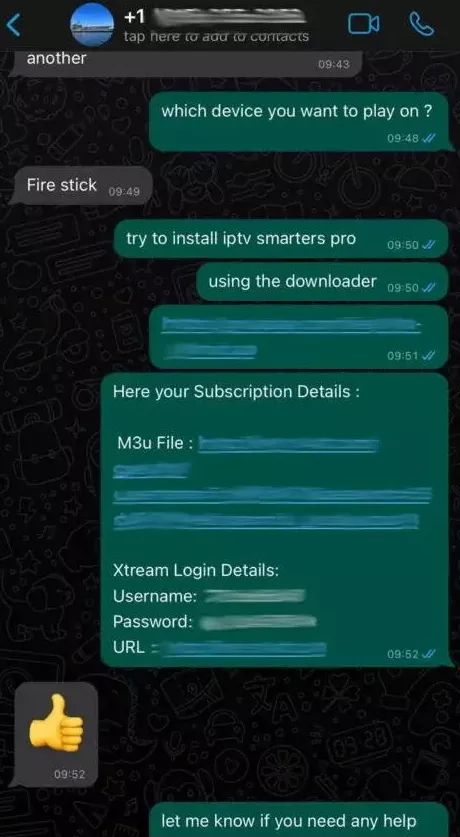
"Here your Subscription Details... Fire stick setup with IPTV Smarters Pro 👍"
Subscriber from British Columbia
Vancouver, BC
"Working great buddy I will get more for sure. Thanks man have a great weekend!"
Canada Client 114
Gatineau & Ottawa Region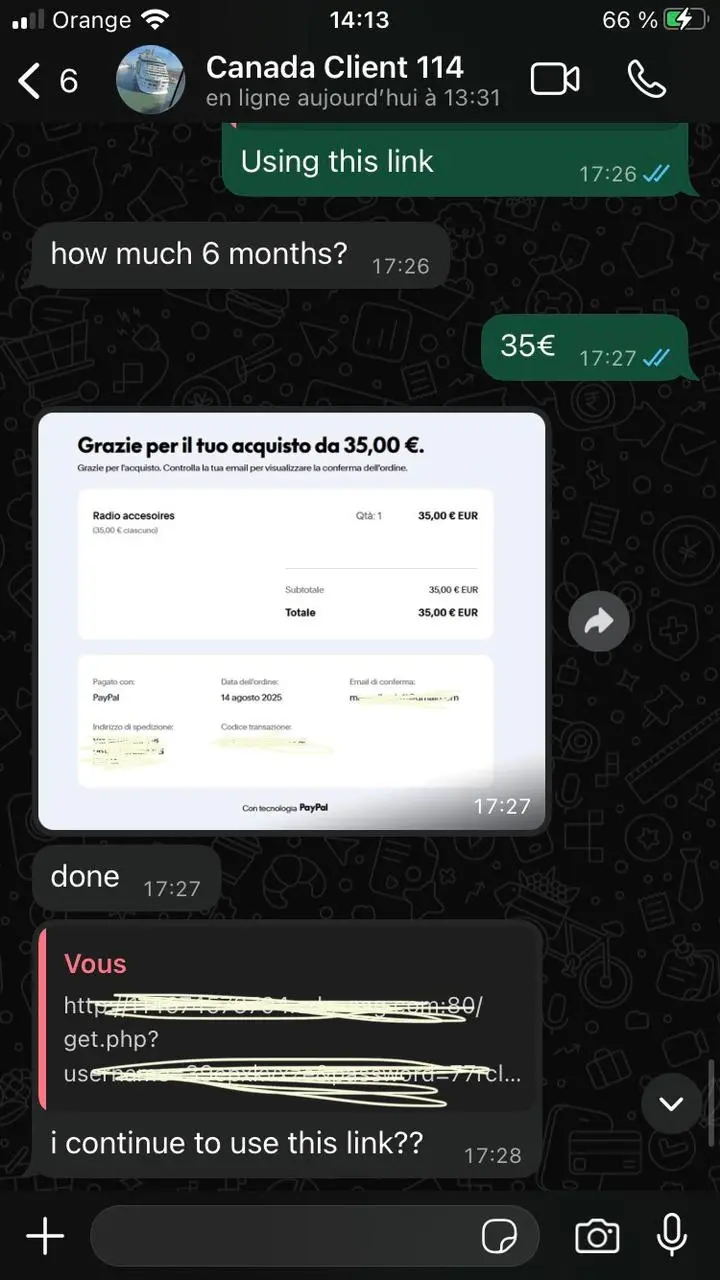
"Payment confirmed, done! I continue to use this link? Fast and simple renewal."
Client Région de Laval
Laval, QC
"I paid for a year subscription... start from today, Enjoy! Ok logging in now"
Abonné John - Western Canada
Calgary & Edmonton, AB
"M3u & Xtream Login delivered... OK got it thanks for your help!"
Client Canada 173
Montreal & Quebec City, QC"Very good it works well I'll take 1 year subs"
Canadian Firestick User
Toronto, ON"Here your Subscription Details... Fire stick setup with IPTV Smarters Pro 👍"
Subscriber from British Columbia
Vancouver, BC"Working great buddy I will get more for sure. Thanks man have a great weekend!"
Canada Client 114
Gatineau & Ottawa Region"Payment confirmed, done! I continue to use this link? Fast and simple renewal."
Client Région de Laval
Laval, QC"I paid for a year subscription... start from today, Enjoy! Ok logging in now"
Abonné John - Western Canada
Calgary & Edmonton, AB"M3u & Xtream Login delivered... OK got it thanks for your help!"
Understanding the Legal Distinction: Technology vs. Content Authorization
The open Internet Protocol Television architecture is 100% legal in Canada
The fundamental question "Is IPTV legal in Canada?" requires a precise, nuanced explanation grounded in Canadian law. The technology of Internet Protocol Television—transmitting digital audio and video packets across IP networks using protocols like HLS, MPEG-TS, and RTSP—is completely legal in Canada, just like web browsers, email protocols, and cloud computing.
Indeed, major Canadian telecommunications giants like Bell Canada (Bell Fibe TV), Telus (Optik TV), and Videotron (Helix TV) deliver their own official television services using IPTV technology. The legality of an IPTV service is entirely determined by whether the entity distributing the stream holds the legal broadcasting licenses and copyright retransmission rights granted by copyright holders and regulated by the Canadian Radio-television and Telecommunications Commission (CRTC).
Canadian Regulatory Framework: The Copyright Act & The CRTC
Key statutory provisions governing retransmission in Canada
In Canada, broadcasting and copyright are governed primarily by two federal statutes: the Broadcasting Act (administered by the CRTC) and the Copyright Act of Canada (R.S.C., 1985, c. C-42). Under Section 31 of the Copyright Act, licensed cable and satellite distributors are granted a statutory retransmission regime under specific royalty tariffs established by the Copyright Board of Canada.
However, the Supreme Court of Canada and the Federal Court of Appeal have clarified that retransmission rights over the open public internet do not qualify for the Section 31 compulsory retransmission license without explicit contractual authorization from content copyright holders. Therefore, unauthorized redistribution of copyrighted broadcast signals constitutes copyright infringement under Canadian civil law.
Refer to Section 31(2) of the Canadian Copyright Act (R.S.C., 1985, c. C-42) regarding retransmission regimes, as well as the Federal Court precedent Bell Media Inc. v. GoldTV.Biz (2019 FC 1432).
Federal Court Precedents: Site-Blocking Orders & Consumer Liability
How Canadian jurisprudence treats service operators versus individual end-users
In recent years, Canadian courts have heard several landmark cases brought by media rights holders (including Bell Media, Rogers Media, and Groupe TVA) seeking injunctions against unauthorized streaming operations. The Federal Court decision in Bell Media Inc. v. GoldTV.Biz (2019 FC 1432), subsequently upheld by the Federal Court of Appeal (2021 FCA 100), established the legality of interlocutory site-blocking orders requiring third-party Canadian Internet Service Providers to block access to unauthorized streaming server IP addresses and domains.
It is important to emphasize that Canadian copyright enforcement actions and statutory statutory damages under the Copyright Act target the commercial operators and resellers who profit from unauthorized redistribution, rather than individual household consumers. Nonetheless, using unverified overseas streaming services exposes consumers to sudden service shutdowns, loss of prepaid subscription fees, and security risks associated with untrusted third-party apps.
How Canadian Consumers Can Protect Themselves
Best practices for safe, reliable home media streaming
1. Be wary of unrealistic claims: Any service advertising "lifetime subscriptions" for a low one-time payment is operating an unstable model that will inevitably shut down or be blocked.
2. Protect your digital privacy: Never install unverified Android APKs from untrusted web forums that request intrusive device permissions like device root access or contacts.
3. Utilize secure payment mechanisms: Pay via reputable channels with consumer protection, such as Interac e-Transfer or credit cards, and avoid transferring funds via irreversible overseas wire transfers.
Clear Answers for Canadian Viewers
Authentic, fact-checked answers addressing setup, ISP compatibility, and channel access.
Related Canadian Streaming Guides
About IPTV Canada 4K
Learn about our Canadian infrastructure and team commitments.
Terms and Conditions
Read our platform usage conditions and service agreements.
Disclaimer & Legal Notice
Important legal notices regarding content distribution.